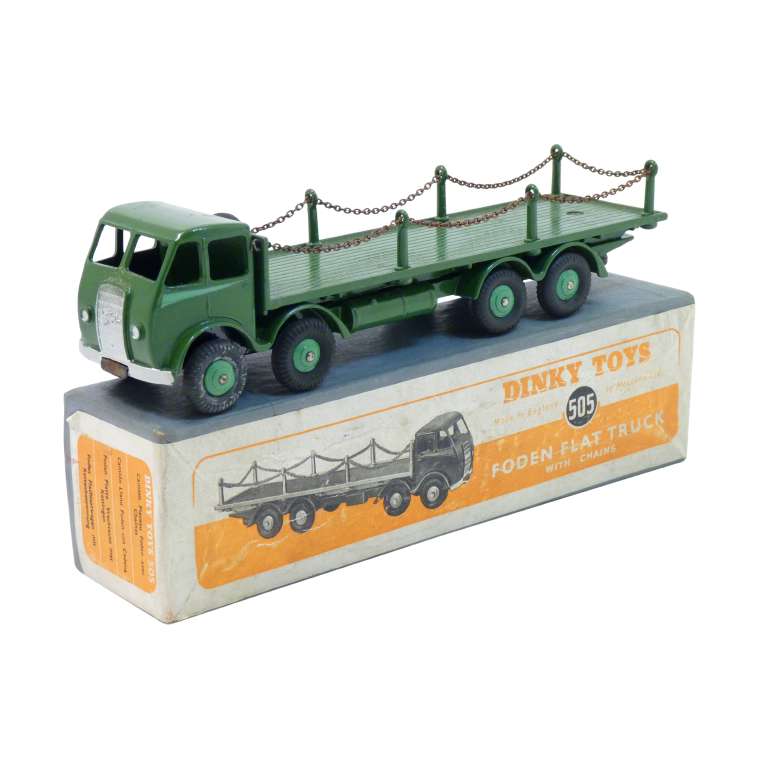
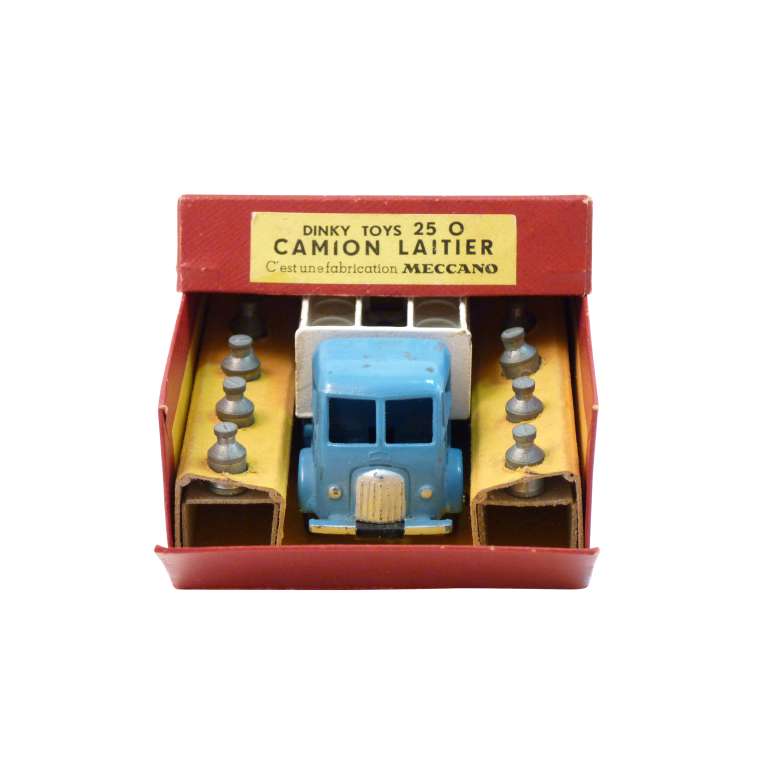
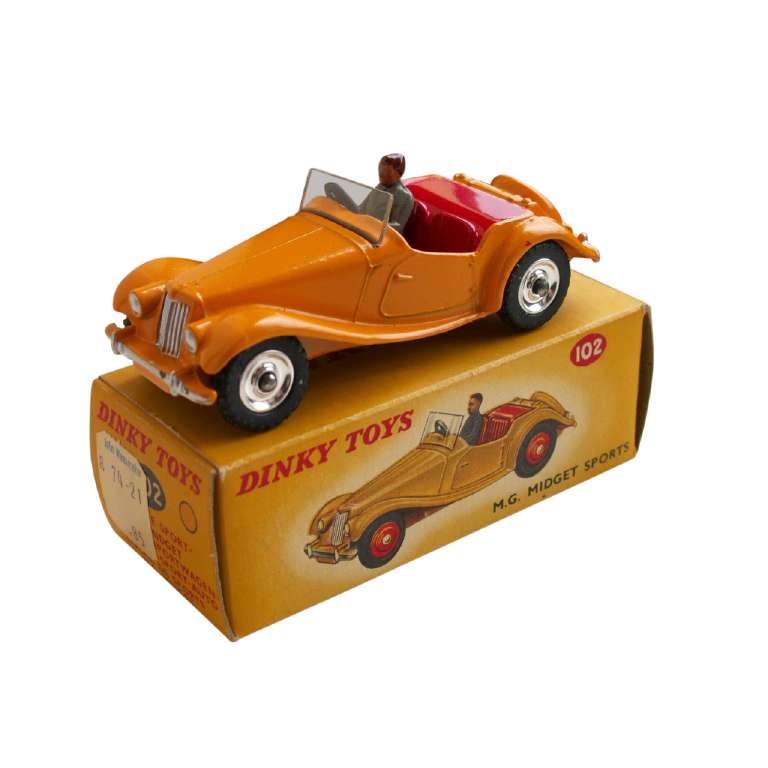
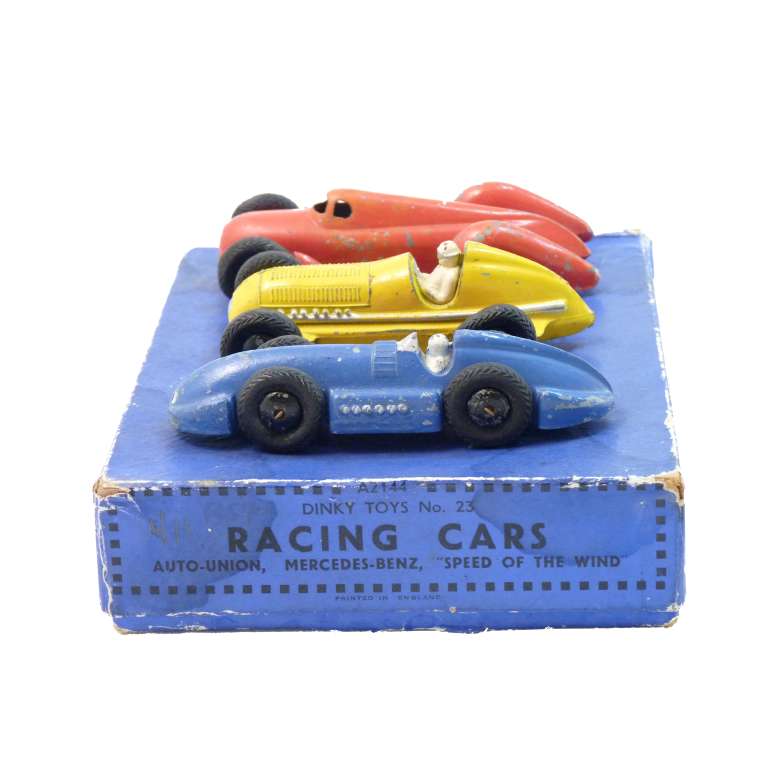
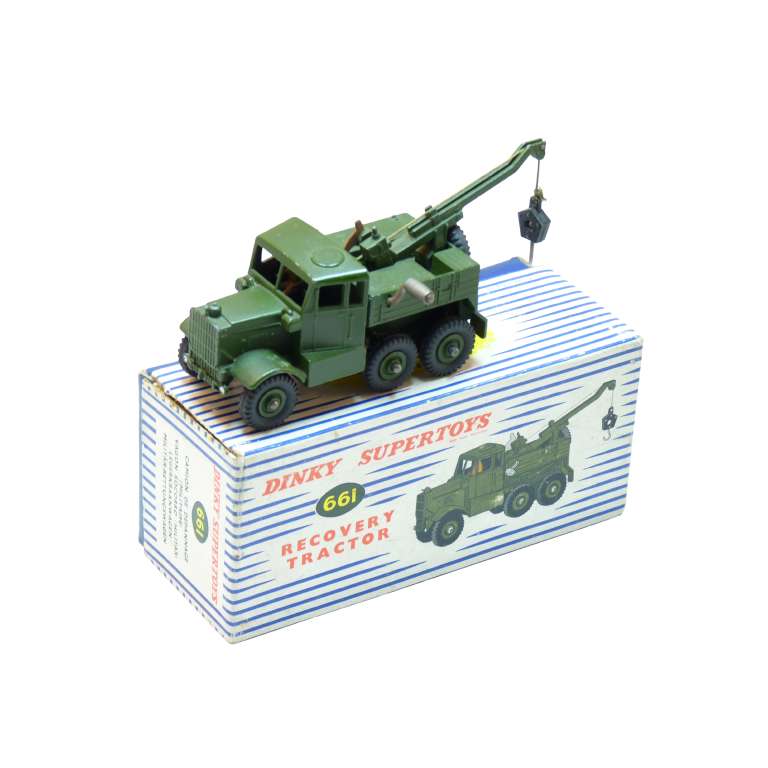
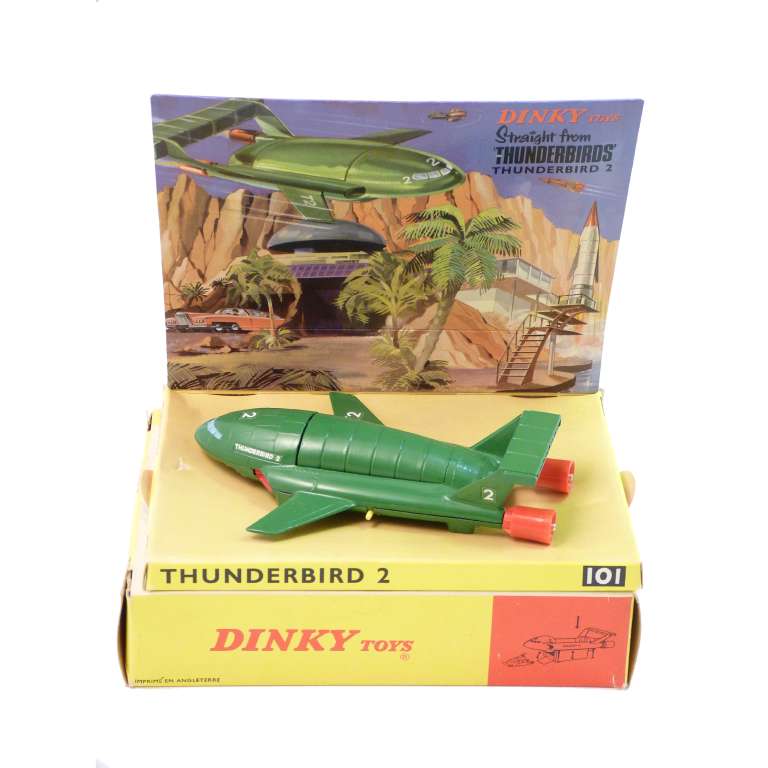
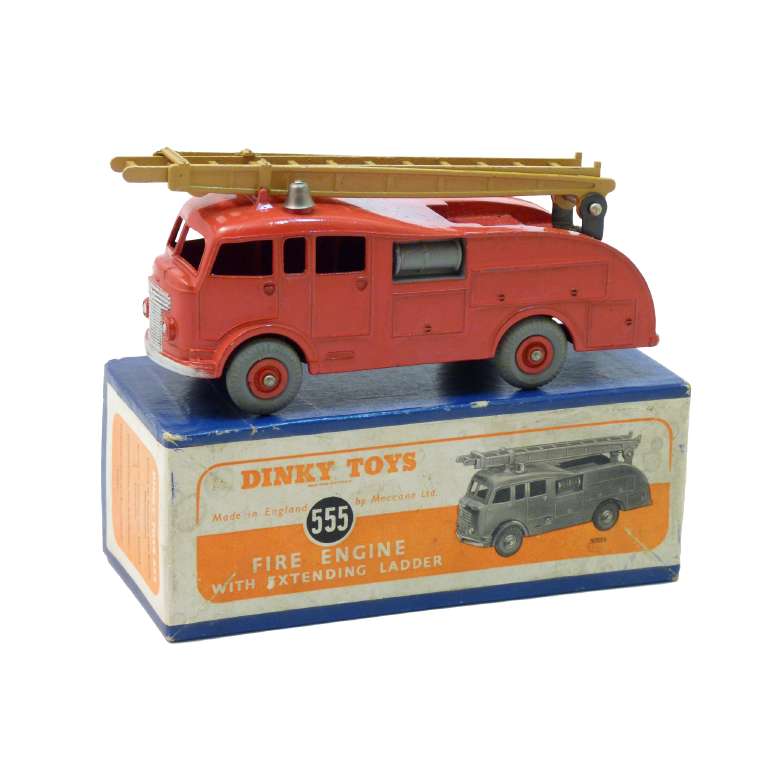
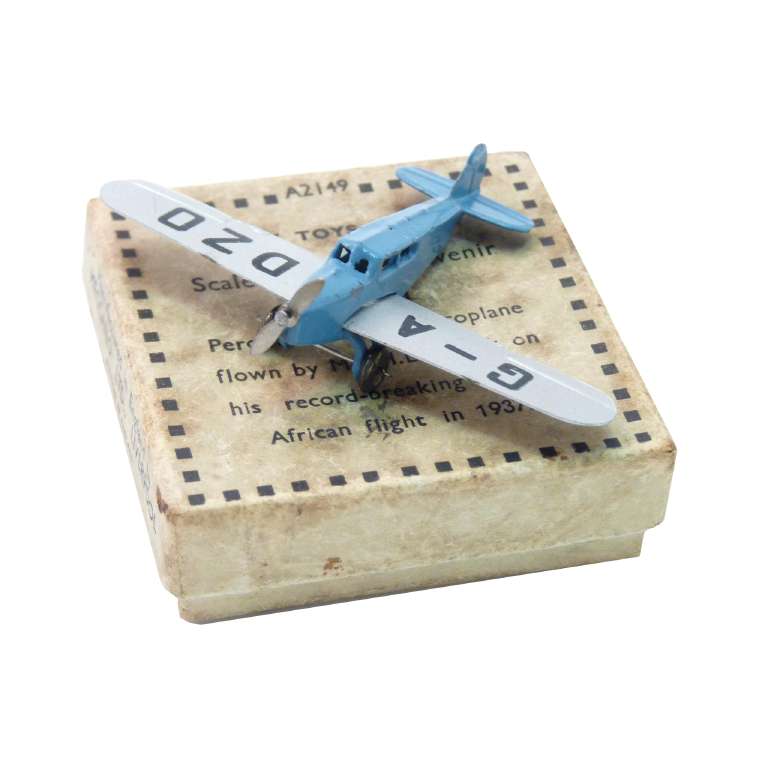
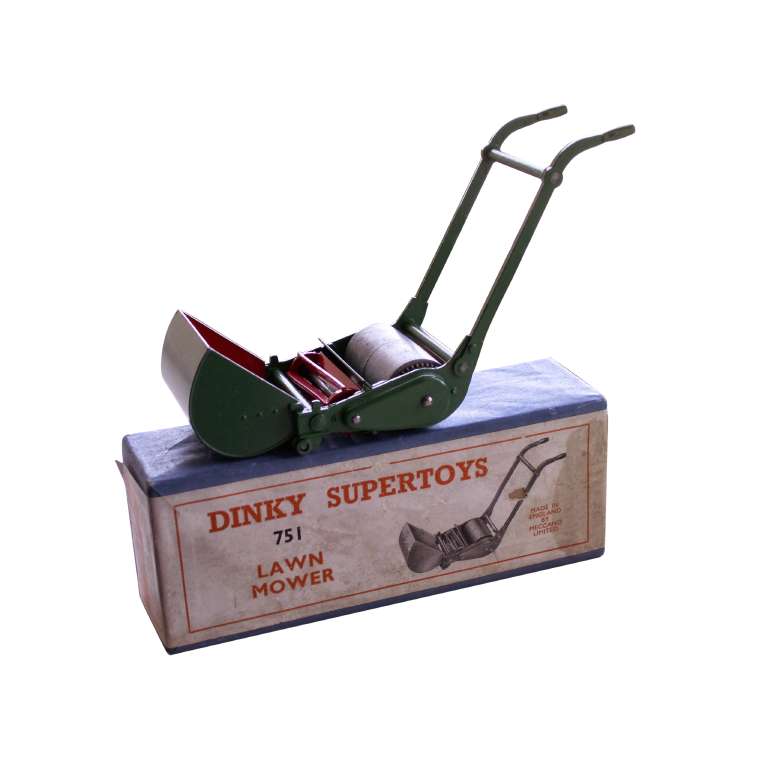
In the early 1950s a Dinky Toy craze hit the United Kingdom and it seemed that all boys (and some adults) had collections. Their dual role as toy and model had no peers at the time. Most of the models were in a scale of approximately 1:48 (but ranged from 1:8 to 1:2000*), which blended in with O scale railway sets, but many buses and lorries (trucks) were scaled down further so that they were around 4 inches long. Larger models (Dinky Super Toys) were not scaled down, and started to have more action features. Notable favourites are the Coles Mobile Crane and the Horse Box (with opening doors). In 1954, the Dinky line was reorganized: cars were now sold in individual boxes, and there were no series of models differentiated by a letter. A separate line of models were also made in France. Both English and French Dinky Toys were exported to the United States.
In 1956 the Mettoy company started a rival line of models under the Corgi brand name. The Corgi toys all had windows, and then started having new features such as plastic interiors and suspension. The competition meant that Dinky Toys had to progress quickly with new ideas and introduced opening doors and boots (trunks), detailed engines, fingertip steering, etc. A third company "Spot-On", owned by Tri-ang, a division of Lines Brothers also competed and their gimmick was to keep accurately to one scale, 1:42, although they never managed to sell as many units as Corgi and Dinky.
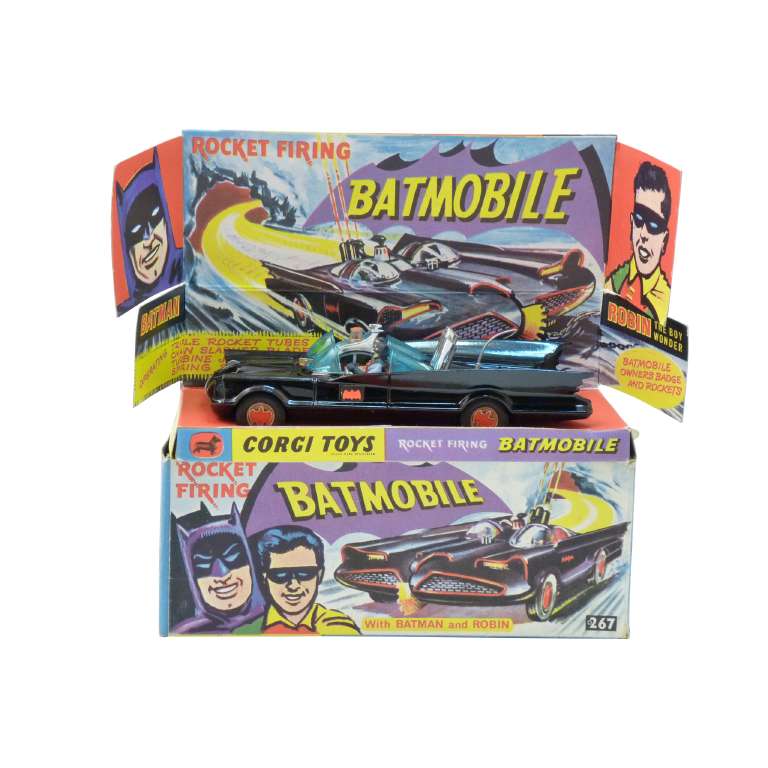
In the mid-1960s Corgi led the way with cars tied to TV shows and films (notably James Bond's Aston Martin). Dinky struggled to keep up, but the market was healthy and both companies continually upgraded their ranges. Competition from Matchbox, who made a popular line of antique cars (Models of Yesteryear), forced Dinky to try this idea too, but it was abandoned after a few models. In December 1964* Tri-ang took over the parent Meccano company (which included Hornby trains as well as Meccano itself). As Dinky were more popular than Spot-On, it was Dinky that continued, although there were a few cars, originally meant for Spot-On, that were made in Hong Kong but marketed as Dinky cars – the only 1:42 scale Dinkies; of which 28* have been recorded. Dinky at this point decided to keep to a 1:43 scale, which was already popular in Europe (French Dinky had for some years used this scale).
The late 1960s saw a new competitor enter the model car market in the UK: Hot Wheels by U.S. toymaker Mattel. Their low-friction axles gave them play value that Dinky and Corgi could not match. Dinky responded with their own "Speedwheels". There were still some wonderful models being built at this time, with all doors opening, speedwheels, high quality metallic paint, and sparkling headlights. However, they were expensive to manufacture and the price could only be kept down if the quantities were high. Then the bubble burst. Changing fashions and international competition meant that the range of models contracted.
French Dinky stopped production in 1972 (some were later made in Spain) and English Dinky limped through the 1970s before closing - Lines Bros itself had collapsed in 1971. The Dinky name was a valuable one and changed hands many times before ending up as part of Matchbox International. They have been issuing cars of the 1960s and 1970s as the "Dinky Collection", but these are models, not toys, and are not as robust or heavy as the "real" Dinky cars.
My name is Jonathan Francis and I have been trading and passionately collecting diecast for five years. I am 19 years old, and am studying Management and French at the University of Nottingham.
Every profit I make goes, bit by bit, towards funding my education. My biggest sales include a 505 first type foden flat truck for £2000, a no. 25 pre war gift set for £2600 and a No. 4 Racing Car Gift Set for £1500.
I am always looking to buy pieces off of people, and if for any reason anyone wants to meet me, I am always happy to chat over the phone or meet them in person. In spite of my age, my offers on collections are extremely competitive, and I have consistantly out-bid rivals on many collections.
If you wish to give me a call, my contact number is 01212 888697
*Thank you to Jacques Dujardin for his help in refining the information on this page.